Why People Stop Caring — And How Leaders Can Change That
Let me start with a simple question.
How many of you have seen an employee who is physically present…
but mentally absent?
They come on time.
They log in.
They attend meetings.
They submit reports.
Yet—
something feels missing.
That missing element has a name.
👉 ENGAGEMENT.
Now here’s a reality check.
As per global research (Gallup)—
📉 Around 77% of employees are disengaged or actively disengaged at work.
📈 Only 23% are truly engaged in any organization—across industries, across countries… including India.
Think about that.
That means—
👉 3 out of 4 people in your office are working on auto-pilot.
Body in the office.
Mind somewhere else.
Heart completely disconnected.
And here’s the dangerous part—
Disengaged employees don’t just work less…
they think less, care less, and contribute less.
Now let me ask you—
❓ If machines worked at 70% capacity, would we accept it?
❓ If internet speed dropped to 30%, would we tolerate it?
❓ Then why do we silently accept human potential running at half-power?
Because we underestimate engagement.
Deep research shows—
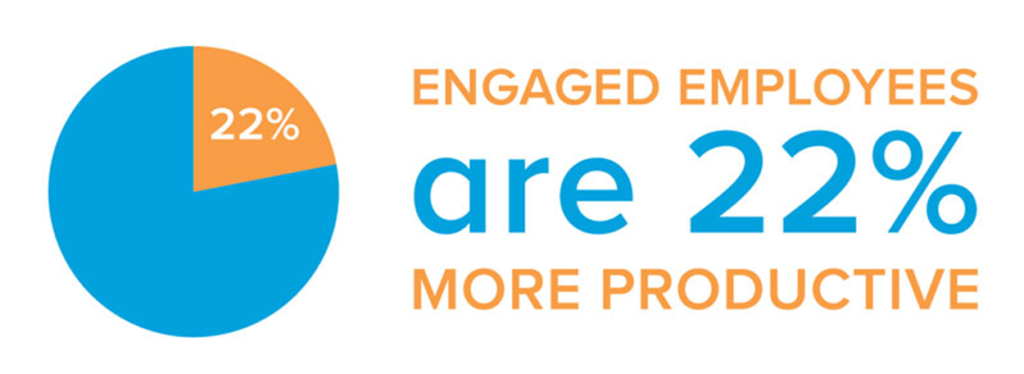
🔹 Engaged employees are 22% more productive
🔹 They show higher ownership, accountability & creativity
🔹 They don’t just complete tasks—they build outcomes
🔹 They don’t ask, “What is my job?”
They ask, “How can I make this better?”
And in the Indian workplace—
where pressure is high, hierarchy is strong,
and silence is often mistaken for discipline—
👉 Engagement is not a “nice-to-have.”
👉 Engagement is a survival skill.
Because disengaged people don’t quit immediately.
They quit mentally first.
They stay on payroll…
but leave the purpose behind.
And that—
is the most expensive loss any organization can face.
Today, we are not talking about motivation.
Not about slogans.
Not about HR policies.
Today, we are talking about—
how to bring the mind, heart, and purpose back to work.
Because when people are engaged—
companies don’t just grow.
They transform.
From my years of work experience—
across different locations, industries, teams, and hierarchies—
I’ve noticed something deeply unsettling… yet incredibly true.
Companies don’t fail because of lack of talent.
They fail because people stop caring.
Not because employees are lazy.
Not because they are incompetent.
Not because they lack degrees or skills.
But because—
slowly…
silently…
👉 Engagement dies.
And when engagement dies, something else dies with it—
Ownership.
Initiative.
Pride.
And finally… trust.
Let me be very clear—
People don’t wake up one day and say,
“From today, I will stop caring.”
No.
It happens gradually.
When effort goes unnoticed.
When ideas are ignored.
When feedback becomes one-way.
When fear replaces conversation.
When targets matter more than people.
Over time, employees learn a dangerous lesson—
👉 “Do only what is asked. Nothing more.”
That’s when they stop thinking like owners
and start behaving like outsiders.
And here’s the harsh truth for leaders—
Engagement doesn’t die because of workload.
It dies because of leadership disconnect.
People can handle pressure.
People can handle long hours.
People can even handle failure.
But people cannot handle being invisible.
That’s why today, I don’t want to talk about
motivation posters, townhall speeches, or HR slogans.
Today, I want to talk about why engagement collapses—
and more importantly—
👉 What leaders can do about it.
Because in today’s Indian workplace—
Talent is available.
Skills can be trained.
Technology can be bought.
But commitment cannot be forced.
It has to be earned.
And the future of every organization will depend on one question—
❓ Do your people just work for you…
❓ or do they believe in what they are building with you?
That’s the conversation we begin today.
Let’s first understand why good people stop caring—
and then, we’ll talk about how great leaders bring engagement back to life.